Buying
Buying Property in Nepal: 11 Things to Check Before You Pay
Planning to buy land, a house, or an apartment in Nepal? Use this practical checklist to verify ownership, documents, access, taxes, maps, and hidden risks before making a payment.
Buying Property in Nepal: 11 Things to Check Before You Pay
Buying property in Nepal can be one of the biggest financial decisions of your life. Whether you are looking for land in Kathmandu, a house in Lalitpur, a flat in Bhaktapur, or investment property outside the valley, the most important rule is simple: verify before you pay.
A beautiful listing, good location, or urgent seller is not enough. Before you give a token amount, sign an agreement, or transfer money, check the documents, ownership, access road, map, tax status, and legal risks carefully.
This guide from BasaiNepal gives you a practical property buying checklist for Nepal.
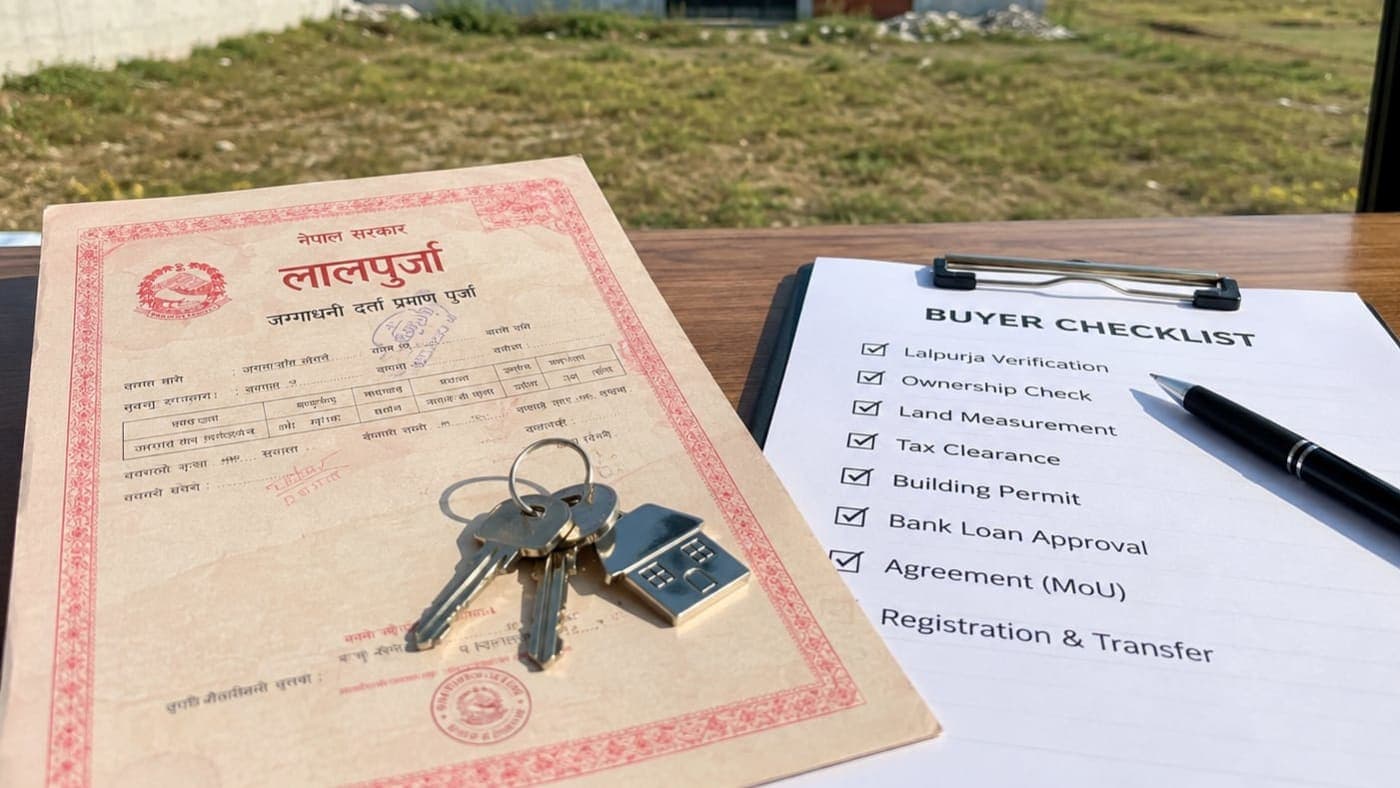
1. Check the Lalpurja carefully
The Lalpurja is the main ownership document for land and property in Nepal. Before moving forward, ask to see the original document, not only a photo or photocopy.
Check these details:
- Owner name
- Plot number / kitta number
- Area of land
- Location details
- Type of land
- Any notes, corrections, or unusual marks
The seller's name on the Lalpurja should match their citizenship and official records. If the property has multiple owners, all legal owners must be involved in the sale process.
2. Verify ownership at the Malpot office
Do not depend only on what the seller or broker says. Visit the relevant Land Revenue Office, commonly called Malpot, and verify the ownership record.
You should confirm:
- The current registered owner
- Whether the land has been transferred before
- Whether there is any mortgage, loan, dispute, court order, or restriction
- Whether the seller has legal authority to sell
This step is very important because property ownership in Nepal depends on official government records.
3. Match the land with the official map
The Lalpurja tells you ownership details, but the map helps you understand the actual shape, boundary, and plot location.
Ask for the official cadastral map, commonly connected with Naapi records, and compare it with the land you are visiting.
Check:
- Plot shape
- Boundary lines
- Road connection
- Neighboring plots
- Actual land size
- Any mismatch between map and ground reality
If the land on paper and the land shown on site do not match, pause the deal and verify again.
4. Confirm road access
Road access is one of the biggest factors in property value in Nepal. A property may look attractive, but if the road access is unclear, narrow, disputed, or private, it can create major problems later.
Before buying, confirm:
- Is there legal road access?
- Is the road public, private, or shared?
- Is the road shown in official records?
- Is there enough width for your future use?
- Can vehicles reach the property easily?
Never assume that a visible path is legally usable.
5. Check tax clearance and local dues
Before purchase, ask whether land revenue tax, property tax, municipal tax, and other local dues are cleared.
Useful documents may include:
- Recent tax clearance receipt
- Land revenue payment record
- Ward or municipality-related clearance, if applicable
Unpaid taxes or local disputes can delay transfer and create unnecessary stress.
6. Review zoning and land use
Not every land is suitable for every purpose. Some land may have restrictions based on land use, road planning, municipal rules, or local development plans.
Before buying, check whether the property is suitable for:
- Residential construction
- Commercial use
- Apartment or rental use
- Agriculture
- Plotting or resale
- Future expansion
If you are buying for construction, speak with the municipality, ward office, engineer, or legal advisor before finalizing.
7. Inspect the property physically
Documents are important, but physical inspection is equally important.
Visit the property more than once and check:
- Boundary walls or markers
- Drainage
- Slope and soil condition
- Water access
- Electricity connection
- Road condition during rain
- Noise and surrounding environment
- Nearby schools, hospitals, shops, and transport
For houses and flats, also check structure, plumbing, electrical wiring, seepage, parking, and maintenance condition.
8. Understand the real market price
Property prices in Nepal can vary widely even within the same area. Do not rely only on one seller's asking price.
Compare:
- Similar listings in the same location
- Recent local transactions, if available
- Road width and access
- Plot shape
- Build quality
- Distance from main road
- Rental potential
- Future development in the area
A cheaper property is not always better. Sometimes low price means hidden legal, access, or location problems.
9. Be careful with token money
Many buyers feel pressure to pay token money quickly so they do not “lose the deal.” But once money is paid, negotiation becomes harder.
Before paying token money, write down:
- Buyer and seller details
- Property details
- Agreed price
- Token amount
- Payment timeline
- Conditions for refund
- Documents seller must provide
- Transfer deadline
Use a written agreement and keep payment proof. Avoid large cash payments without documentation.
10. Use professional help when needed
If the property value is high, the ownership history is complicated, or you are unsure about the documents, consult a real estate lawyer, engineer, surveyor, or trusted property professional.
Professional help is useful for:
- Legal due diligence
- Agreement review
- Boundary verification
- Building inspection
- Tax and transfer guidance
- Risk assessment
The cost of checking properly is small compared to the cost of buying the wrong property.
11. Keep all records safely
After the transaction, keep copies of every important document.
Save:
- Agreement papers
- Payment receipts
- Bank transfer proof
- Lalpurja copy
- Tax receipts
- Map documents
- Citizenship copies used in transaction
- Communication with seller or broker
Good records protect you if any question appears later.
Quick checklist before buying property in Nepal
Before you pay, confirm:
- Original Lalpurja checked
- Seller identity verified
- Ownership verified at Malpot
- Map and land boundary matched
- Road access confirmed
- Taxes and dues checked
- Land use understood
- Physical inspection completed
- Market price compared
- Written agreement prepared
- Professional advice taken if needed
Final thoughts
Buying property in Nepal is exciting, but it should never be rushed. A good property is not only about location and price. It must also have clear ownership, proper documents, legal access, realistic value, and no hidden disputes.
At BasaiNepal, our goal is to make property search easier, clearer, and more reliable for buyers, renters, owners, and investors across Nepal.
Browse verified property listings, compare options, and make your next move with confidence.
Tags